
A Viking Funeral
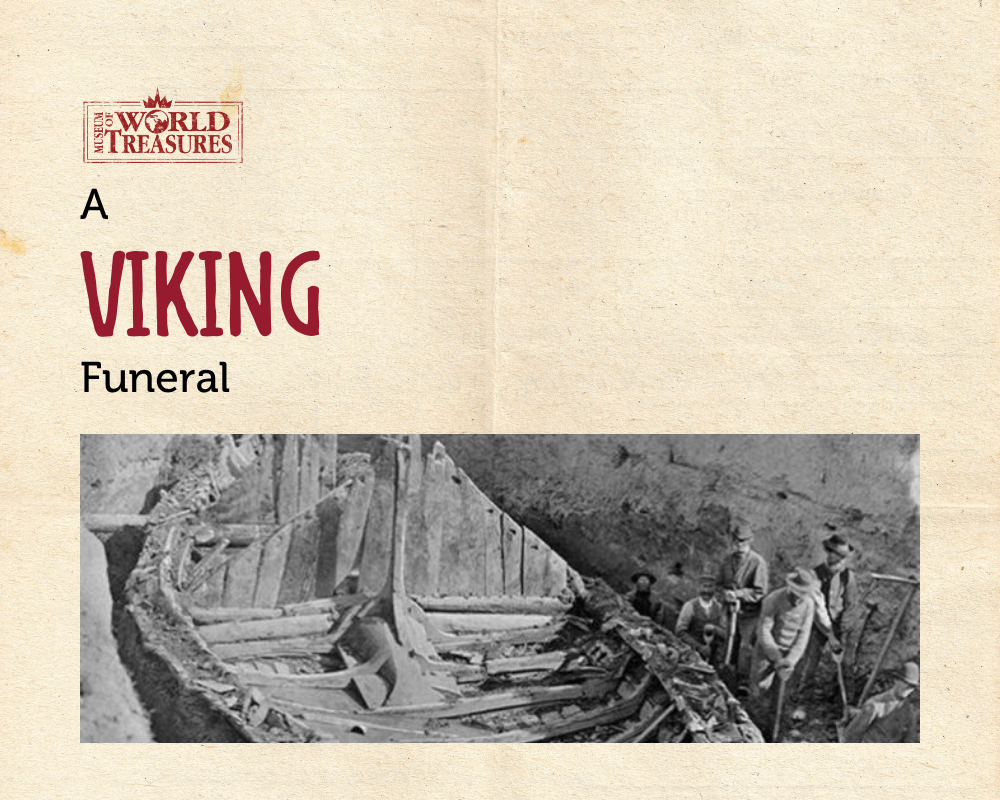
Have you ever heard of a “Viking’s funeral?” In pop culture this phrase refers to the process of pushing the deceased into a body of water after lighting them and the vessel ablaze. This wasn’t the traditional funerary ritual for the Vikings, however, the importance of ships in both their lives and deaths is undeniable. Vikings, a group of people inhabiting what is now known as Norway, Sweden, and Denmark from the 8th to the 11th centuries, were a seafaring people. Advanced ship engineering and architecture allowed them to navigate through most waterways with speed and efficiency. Additionally, ships also played a role in their journey to the afterlife. Historical and archaeological evidence has informed a more accurate idea of what a Viking’s funeral may have looked like.
The Gokstad Ship
One well-researched archaeological site of this nature is the Gokstad Ship burial. Excavated by Nicolay Nicolaysen in 1880, this burial mound contained a 76-foot-long ship interring an alleged chieftain. Despite having been raided several times since the original burial, many significant artifacts remained including sailing equipment, wooden furniture, various tools, game components, and animal remains.[1] These items, the ship itself, and the construction of the burial site all contributed to a burial ritual likely meant to send the deceased into the afterlife. This metaphorical journey symbolized by the ship itself went even further. Once the ship was beached for the burial, blue-toned clay was packed around the hull emulating a waterline.[2] This conclusion was further supported by the oars of the ship being set in rowing position.
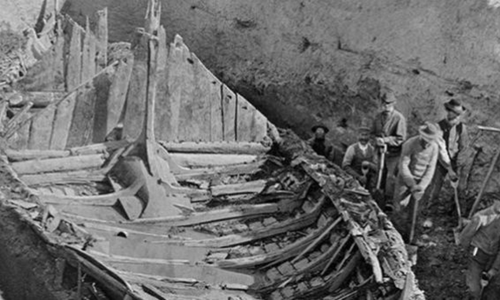
Despite its ancient age and the less-than-stellar archaeological methods of the 19th century, the Gokstad Ship remained remarkably intact.
The Oseberg Ship
The Oseberg Ship burial in Vestfold, Norway was excavated in 1904 by Gabriel Gustafson and Haakon Shteleig. This site is unique in that the artifacts found within suggest that the women buried there were extremely wealthy and/or of immense social importance. The 71-foot-long ornately carved ship was stocked with beautifully crafted sleighs, carts, brass tools, textiles, and the remains of exotic animals such as peacocks.[3] As a result of these unique characteristics, many have speculated towards the identity of the deceased. One common theory is that the older woman was Queen Åsa, the grandmother of King Harald Fairhair. Though this could not be confirmed due to contamination of the remains. Carbon dating was able to reveal that the women lived between 730-810 CE.[4] Regardless of their identities, the research done at this site has corroborated and debunked historical information on Viking burials that we have gained from primary literature. Due to the fragile nature of these primary sources, very few remain today; however, a couple of key sources have expanded upon conclusions drawn from archaeological analyses.
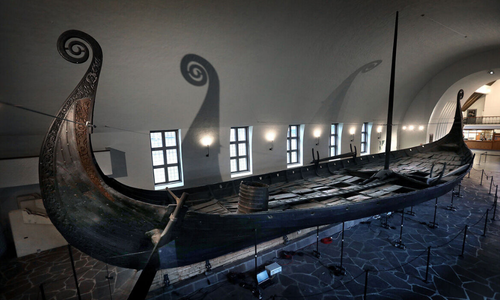
The Oseberg Ship has recently been moved to the new Museum of the Viking Age set to open in 2027.
Ahmad ibn Fadlan’s The Risāla
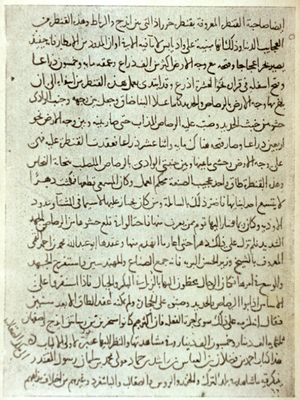
The only alleged instance of the Viking’s funeral as many think of it today came from Ahmad ibn Fadlan. Fadlan was a diplomat of the Abbasid Caliphate who, with his translator, documented his interactions across Europe. In one account he describes Volga Vikings putting their dead in a boat, setting it on fire, and pushing it out into the water. Although there is no archaeological evidence supporting this claim, Ahmad ibn Fadlan’s accounts, or risāla, are considered to be a fundamental primary source on the topic in other regards. In his description of the Volga Vikings in modern-day Russia, he included an in-depth breakdown of a different burial ritual from beginning to end. Generally, the ritual went as follows: the belongings of the deceased were distributed, a slave was chosen to undergo ritual treatment and execution alongside the burial, the ship was beached, the ritual took place, and lastly the ship would be buried. The 2020 stratigraphical study of the Gokstad site corroborated this chronology. By analyzing the material and literary evidence available, historians and archaeologists have been able to form a more complete understanding of what Viking burial rituals were really like.
The Sagas of Snorri Sturluson
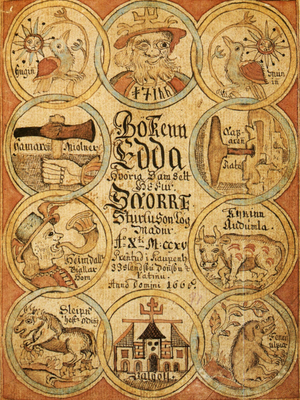
Literary accounts as historical evidence raises many questions pertaining to biases and completeness of information. Just as Ibn Fadlan and his translator brought their own biases into the construction of The Risāla, the sagas of Snorri Sturluson are not without fault. Written c. 1230, this information is approximately 400 years removed from the lives of the women buried in the Oseberg. In Sturluson’s writings he describes two distinct eras of Scandinavian burial practices. In the Ynglinga Saga Sturluson describes the Age of Burning and the Age of Mounds referring to periods of cremation and burial as the dominant funerary practice. The dawn of mound-burial practices was said to have been ushered in by Odin who was buried in this way. This brings to light an interesting aspect of medieval belief called euhemerism: the interpretation of myths as traditional accounts of historical persons and events. Sturluson and his Nordic contemporaries believed that Odin and other pagan deities were once mortals who ascended to deity status after death. In this way, Odin’s mound-burial gave him access to godhood and Valholl[5], one of the several afterlife destinations in Viking mythos. Though this delineation of historical periods and events are not reflected in the archaeological record, it provides us critical information of the evolution of beliefs within these regions. Furthermore, Sturluson’s sagas provide information on the religious beliefs of the Vikings, at least as their ancestors understood it. His description of Odin’s euhemerism and the inclusion of Valholl are intangible aspects of belief that cannot be reflected in material evidence.
Conclusion
The importance of ships in Viking society in both life and death is undeniable. By studying archaeological and historical evidence scholars have been able to piece together a clearer picture of Viking beliefs and ritual surrounding death. Stratigraphical studies and early archaeological reports of the Gokstad Ship support the claims of Ahmad ibn Fadlan in regard to Viking burial rituals. Furthermore, archaeological studies disproved Sturluson’s periodization of burial practices. The bottom line is we still aren’t 100% sure what the Vikings believed, and we know there was variation in ship burials across space and time. These are just a couple of examples of a rich tradition that persisted for hundreds of years.
[1] Jason Urbanus, “Revisiting the Gokstad,” Archaeology 67, no. 4 (2014):37.
[2] Andrew Curry, “Setting Sail for Valhalla,” Archaeology Magazine, August, 2025, https://archaeology.org/issues/online/features.setting-sail-for-valhalla/
[3] Thorlief Sjøvold, “A Royal Viking burial,” Archaeology 11, no. 3 (1958): 198.
[4] Per Holck, “The Oseberg Ship Burial, Norway: New Thoughts on the Skeletons from the Grave Mound,” European Journal of Archaeology 9, no. 2 (2006): 186.
[5] Commonly referred to as Valhalla. The antiquity of Vikings and Sturluson’s works means there are numerous spelling variations. Sturluson’s name has been found spelt over 5 different ways!
