
All Wrapped Up: Mystical Mummies Fact vs Fiction
This week let’s look at some myths about mummies. It’s time to separate the fact from the fiction in All Wrapped Up! Before we dive into mummy myths however, if you like what we are doing here you can support the Museum here. You can also follow us on Facebook and Instagram. Or you can join our mailing list below!
Myth 1: All mummies are Egyptian.
False! Mummies are not unique to Egypt. Many cultures intentionally and unintentionally created mummies. See next week’s post, All Wrapped Up: Which Mummy are You?, for more information about other types of mummies.
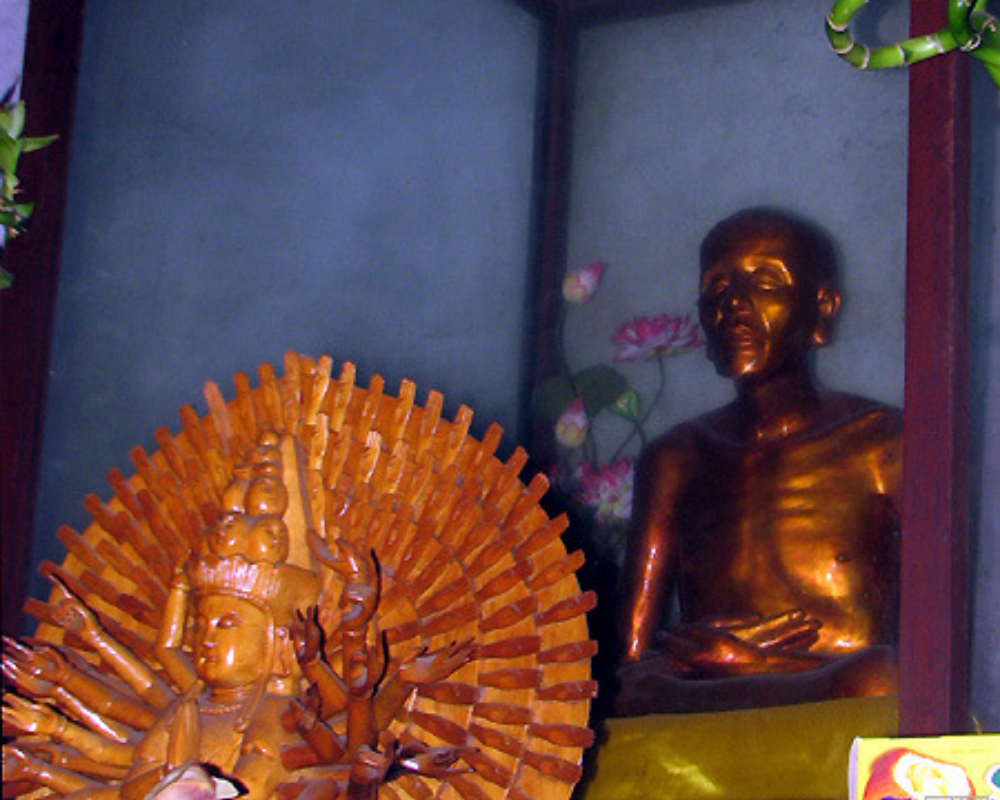
Various other cultures have practiced mummification, including certain Buddhist groups. This is a depiction of Zen master Chuyet Cong’s mummy.
Myth 2: All mummies were Royal.
False! The Ancient Egyptians practiced mummification across all levels of their society. Many of the mummies we have access to today are of the higher classes, such as royals or priests and priestess, because they would have been able to afford a higher quality mummification process and a better burial place. However, many of the necropolises that are being excavated are full of the mummified remains of many common people.
Myth 3: The Victorian’s ate mummies.
True! And it wasn’t just them either. Corpse medicine, or medicinal cannibalism, was the historical practice of consuming human body parts, fat, or blood as a curative treatment. It was widespread across Europe from the Middle Ages all the way through to the 19th century. Ground up skulls was one common ingredient, along with ground up mummies. Ingested, they believed it could cure internal bleeding, headaches, bleeding, epilepsy, and plenty more. Human fat was often rubbed on bandages and applied to the skin to ease aches and pains. The theory emerged from homeopathic ideas where like cures like the ground skull cured head pains. They also believed that the remains were powerful because they contained the spirit of the body from which the remains were taken, and the spirit was a very real part of physiology, linking the body and the soul. The practice began to fall out of favor in the 18th century and was only practiced in very small amounts by the 19th.
Myth 4: All mummies were human.
False! The Egyptians mummified many animals. There are several instances of dogs being mummified, like the hunting dog found in Tomb KV50, near the tomb of King Amenhotep II. Dogs were domesticated and were just one of many animals kept as pets. Cats were also beloved pets and held great religious significance to the Ancient Egyptians. Prince Thuthmose of the 18th Dynasty was buried with his pet cat, interred in its own stone sarcophagus right alongside of his. It’s not hard to imagine that many ancients had their beloved pets mummified when they passed in order for them to journey on to the afterlife as well. They also mummified many animals for religious reasons. Here in the Museum, we have a cobra, an ibis, and a falcon. Many of the Egyptian gods had an animal aspect assigned to them and the mummified animals were often offered to the gods.
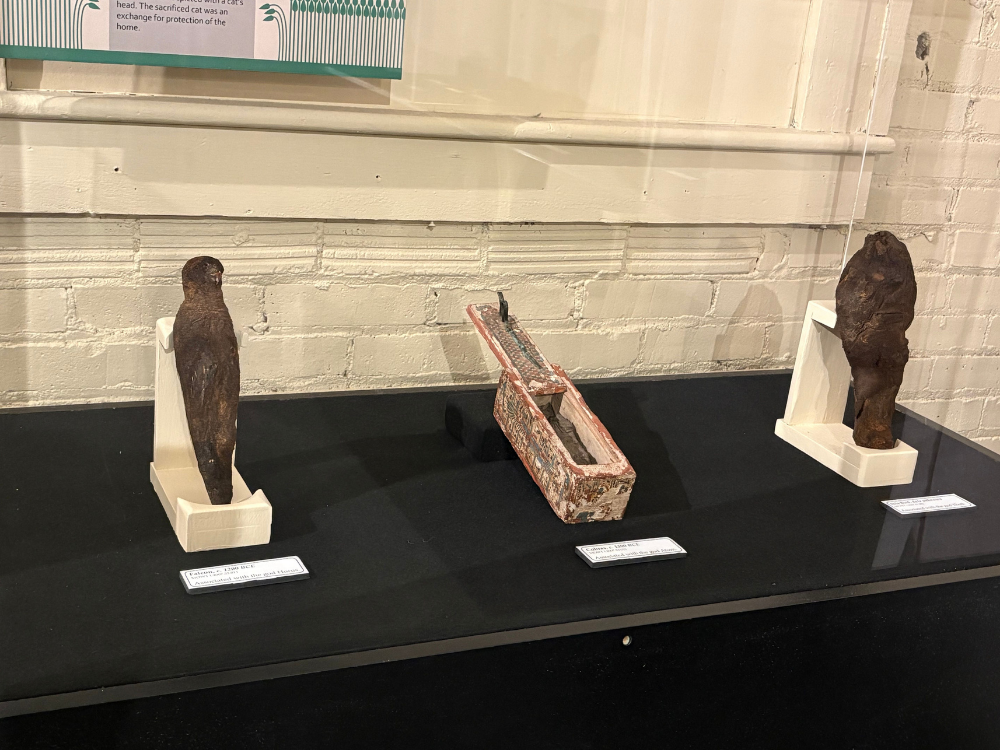
The Museum has a few mummified animals on display in our Seeking A’aru exhibit. The animals displayed are a cobra, an ibis, and a falcon.
Myth 5: The Pharaoh’s Curse is real.
True! Well, in a way. The Ancient Egyptians very much believed in the curse and in the sanctity of the tomb. Their respect and reverence for the afterlife and the rituals surrounding death meant that they looked at disturbing the resting place of their dead as something to be done only in the most extreme situations. The caches of mummies that we find, like in Deir al-Bahari, were an attempt by priests to protect the mummies from grave robbers. Everything that was placed with the pharaohs in their tombs was meant to serve them in the afterlife. If you removed it, you removed it from their afterlife. For them, magic was a very real and present thing and they took it very seriously. Today though, it’s just seen as a silly superstition.
Myth 6: Screaming mummies died afraid.
False! The mummies that you see with their mouths gaping open, the “screaming mummies”, did not die afraid. When you die, you go through a period where your body does stiffen up called rigor mortis, but after that passes, after roughly between 24-48 hours, the body goes completely lax. Ergo, your mouth falls wide open. Without anything to hold it closed, it will stay in that open position. Most Egyptian mummies have their mouths bound shut. There are several theories as to why this happens.
- The screaming mummies are criminals and were left like that on purpose, as a sign of the shoddy mummification they were provided.
- The skin dried tightly and pulled the jaw more open than it originally was. Could be a consequence of poor mummification, a result of the wrapping not being done correctly, or some other event that we will never know about.
- Cadaveric spasm, a rare forensic phenomenon where the muscles stiffen immediately at death, bypassing the normal postmortem relaxation. It freezes the body in the position it was in at death. It is generally indicative of a very violent or traumatic death and cannot be undone.
Myth 7: The mummies are meant to come back to life.
False! They believed in a form of resurrection, but the body was preserved in an attempt to give the spirit a vessel for the afterlife. It was far more spiritual that it was material. The spirit would take the form of the body in the afterlife, and so it was important to take the proper care of the body. Everything in the tomb and on the body would appear in the afterlife just as it appeared in this life, and so it was important for the Egyptians that the body of the deceased be well taken care of. There’s no need to worry about a mummy shambling about like a Scooby Doo monster, trailing linen everywhere.
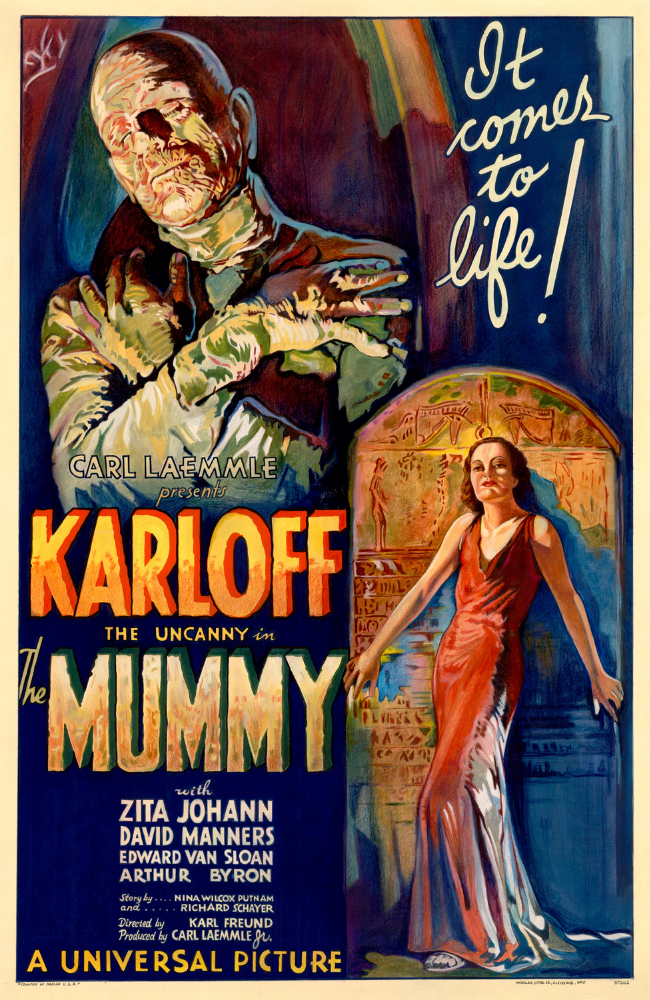
Universal Picture’s 1932 movie The Mummy helped to inspire the modern day monster version of a mummy as an undead creature.
Myth 8: All mummies are creepy.
False! Take a look at some images of the wrapping styles used by the Greeks and Romans who lived in Egypt during the Ptolemaic period or during Roman rule. The wrapping is intricate and geometric, almost a work of art. And many Egyptian mummies were often painted, red for men and yellow for women, to give them a more life-like appearance. And let’s be honest, who wouldn’t want to have a giant golden mask made of themselves ala King Tut?
