
Greco-Roman: An Introduction to the Classical World of Antiquity
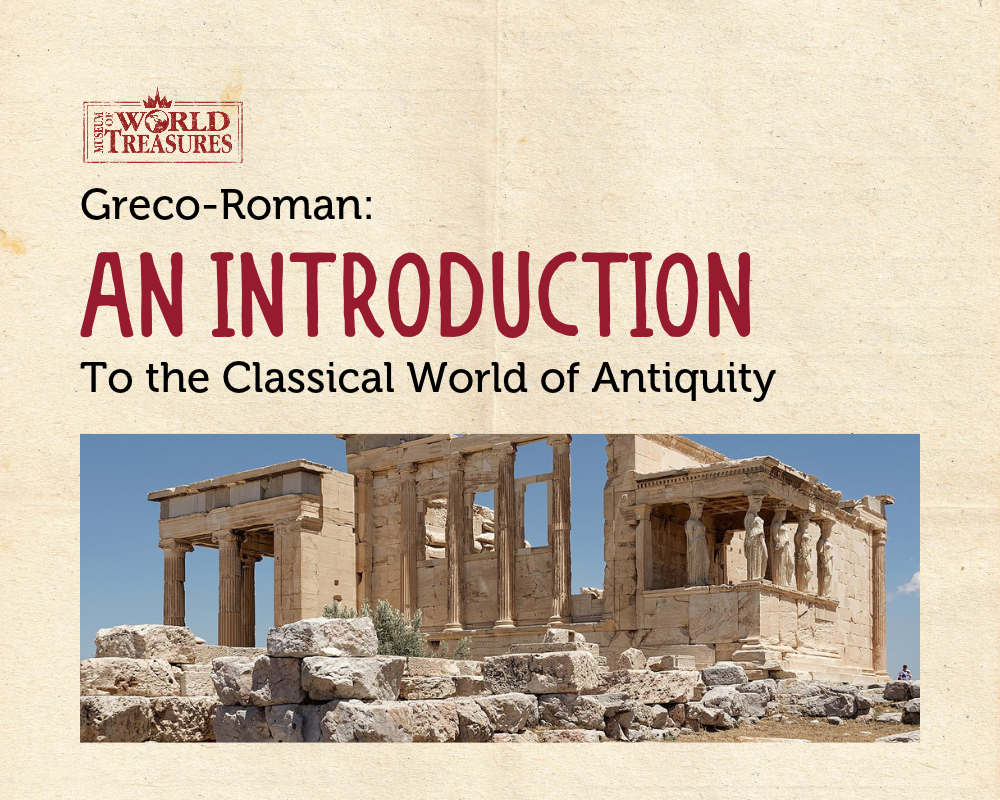
The term “Greco-Roman” is what is often used to describe the culture, languages, architecture, and literature of ancient Greece and Rome, through 330 BCE to the first three centuries of the Roman Empire. But why is it called this, and why are the two civilizations so intertwined?
Before we dive into Greek influences on the Romans though, if you like what we are doing here you can support the Museum here. You can also follow us on Facebook and Instagram. Or you can join our mailing list below!
Magna Graecia: The First Influence
In order to understand the word Greco-Roman, and what that encompasses, one must be aware of Magna Graecia. Magna Graecia was the name for the coastal areas of southern Italy which were colonized and established by multiple ancient Greek city-states between the 8th and 5th centuries BCE. The first colony to be founded was Cumae around 740 BCE by the Euboeans, and the last colony was Heraclea in 433 BEC. This area of southern Italy was colonized by the Greeks not only because the land was fertile and arable, but also because it was a hub for trade and activity between the Greek, Etruscan, and Phoenician civilizations. These colonies spoke Greek, worshipped the same gods, and had the same government setup, including poleis (singular polis), which were the community structures in the ancient Greek world.
By the late 5th century BCE, the colonies of Magna Graecia began to run into conflicts with the indigenous tribes, particularly the Oscans. The Oscans eventually overran the Greek colonies. However, interestingly, the Greeks left their way of life with the natives, including their polis system, architecture, art, religion, and even language. Over the next few centuries, they came into more and more contact with Rome, and were brought fully under Roman control by 89 BCE.
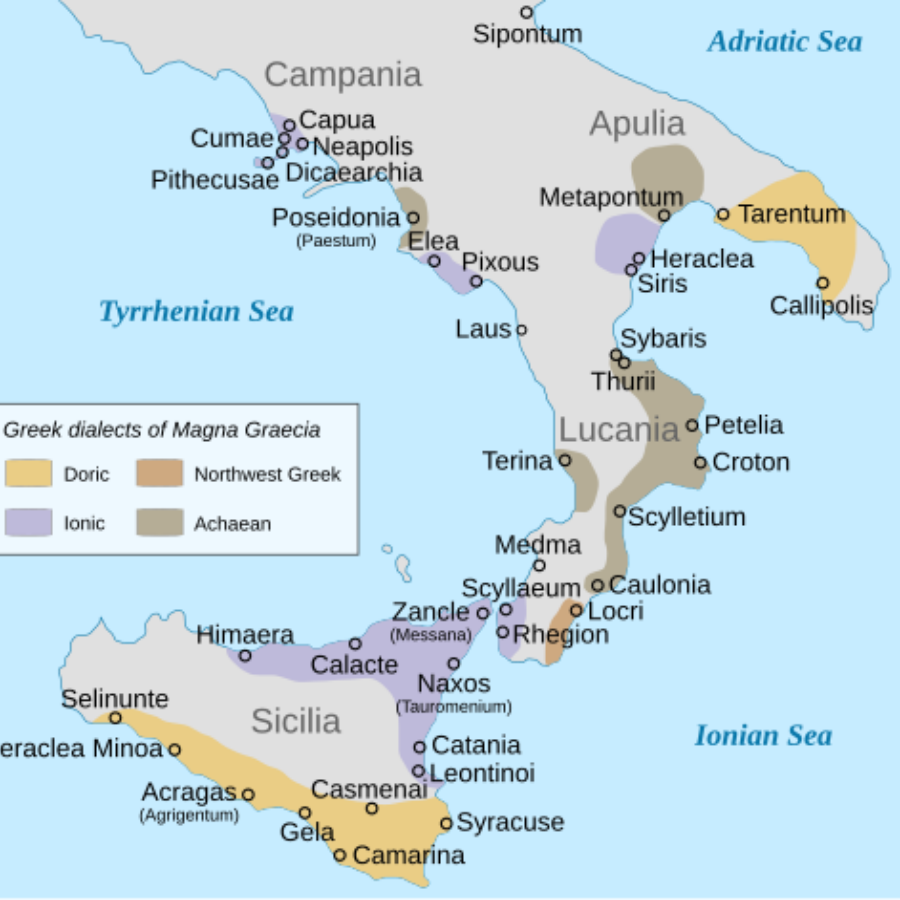
“The Ancient Languages of Europe – Greek Dialects” by Roger D. Woodard, September 6, 2008, Cambridge University Press
A map of the Greek colonies in Magna Graecia, along with their dialect groupings.
The Etruscans
The Magna Graecia colonies were the first Greek influences in Italy. But of the native peoples that interacted with them, the Etruscans were perhaps the most powerful. The Etruscans flourished between the 8th and 3rd centuries BCE, so around the same time as Magna Graecia. The Greek colonies of Magna Graecia were in the southern boot of Italy, while the Etruscans were in the central and northern areas, and because of the locations of the two peoples, they began to seal the gap between what would eventually become Rome and Greece.
The Etruscans were renowned for their rich mineral resources, and were a major trading power in the Mediterranean, making them a strong dealer with the Greek colonies, as they had access to items that the Greeks did not. They manufactured metal tools and pottery, among other items, in materials such as gold and silver. They had an extensive trade network which connected the Etruscan cities to each other, to northern tribes, and to other nations such as the Phoenicians, Greeks, and Carthaginians. Despite being a big exporter of things like iron, wine, olive oil, and grains, they also imported many items, such as raw materials and manufactured goods like Greek pottery.
Because trade flourished, there was a big cultural impact made between cultures. Craftsmen and artisans from Greece (and other places, as well) settled in Etruscan trading ports that were established on the Tyrrhenian coast. Eating habits, religion, the alphabet, and clothing are among some of the parts of life where Greeks and other eastern cultures would transform the Etruscans, helping to allow for the acquisition of Greek culture later on in Roman history.
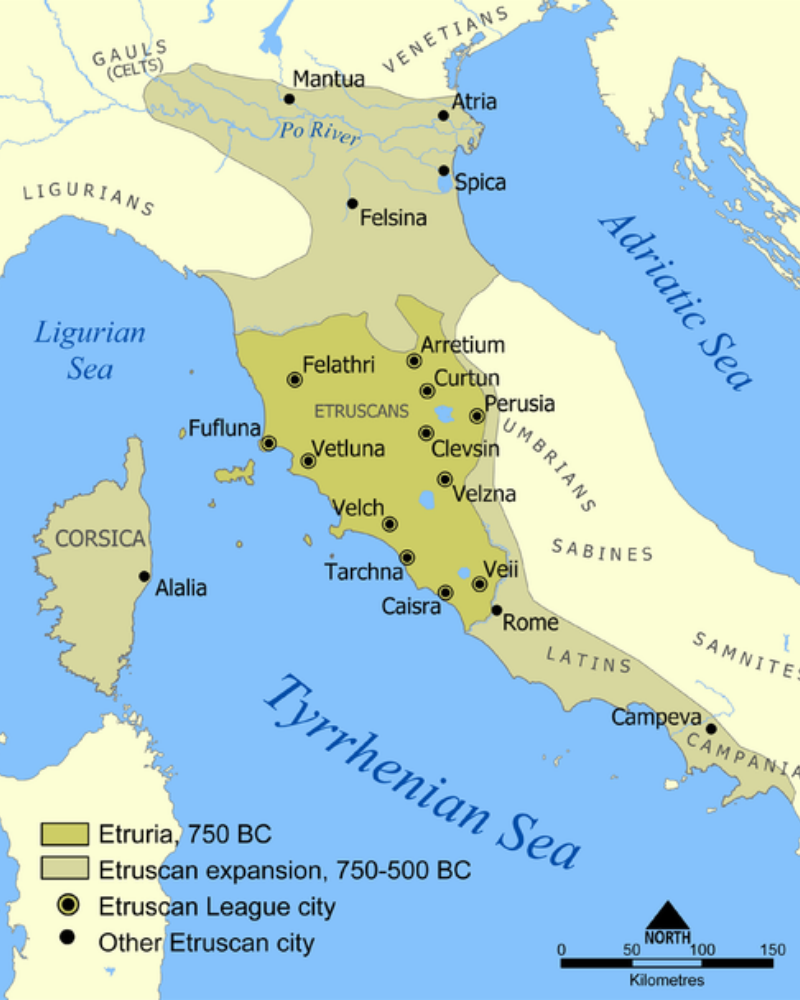
“Etruscan Civilization” from National Geographic Magazine Volume 173, Figure 6, June 1988
A map showing the areas of Italy inhabited by the Etruscans.
A Greek Way of Life
Because of this coexistence with Magna Graecia, as well as because of Etruscan trade with Greece, by the time the Romans began to conquer this area, they were already largely influenced by Greek culture, and were inspired by their way of thinking and life, among many other things. By the time Rome had conquered the Greek mainland after the Battle of Corinth in 146 BCE, they had already spent many centuries being influenced by the Greek way of life. This made it easy for Greek culture to find its way into Roman life, and Greek philosophy, architecture, literature, education, art, government, economics, religion, and even language had their fair share of influence on the Romans. The combined Greek way of thinking and Roman political achievements established what is now known as the Greco-Roman culture, which spread throughout the Mediterranean world.
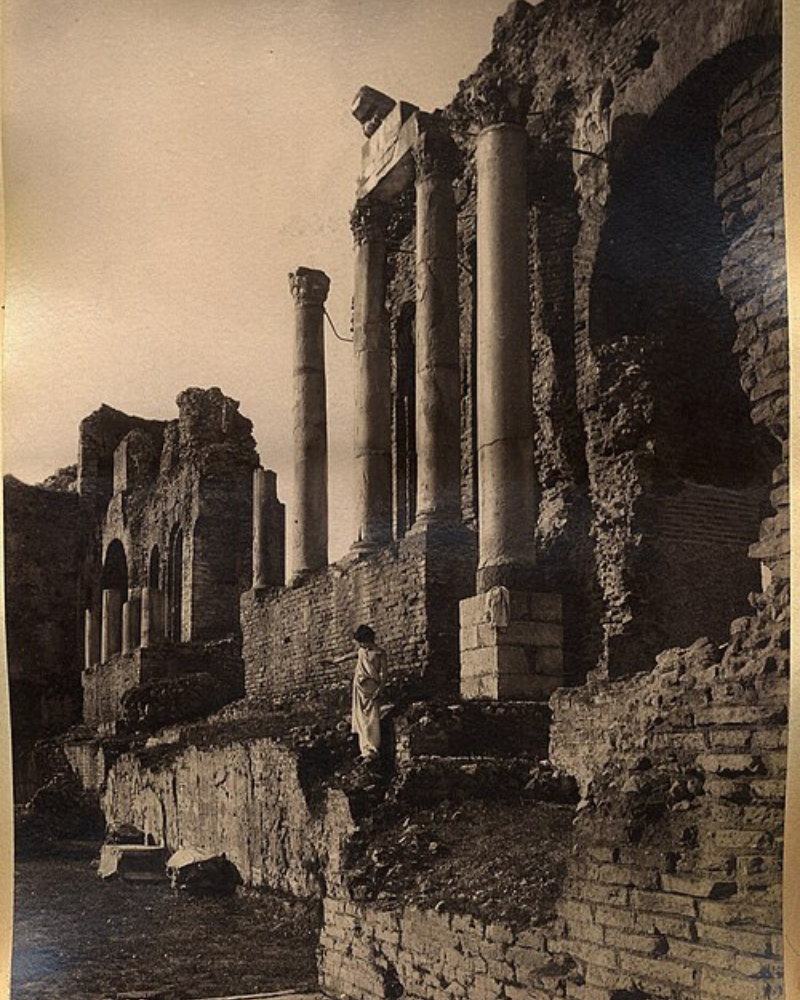
“Greek Theater at Taormina” by Wilhelm von Gloeden, sometime before 1899
This image shows an ancient theater at Taormina, Italy, showcasing the influence of Greek architecture on Roman buildings.
